
This is preclinical, mouse-only research. The peptide described is experimental and is not an approved treatment. Nothing here is medical advice.
A research group led by Clifford Woolf at Boston Children’s Hospital has described an unusual way to calm overactive pain-sensing nerve cells in mice. Instead of blocking a sodium channel directly, they disrupted the channel’s partnership with a scaffolding protein. The results were published in Cell Reports Medicine on 6 October 2026, according to the hospital’s announcement as carried by News-Medical and EurekAlert. The paper is titled ‘Disruption of the Nav1.8/Ankyrin3 interaction in nociceptors reduces pathological pain-like behaviors in mice’ (DOI 10.1016/j.xcrm.2026.103090). We have not independently reviewed the full paper, so the details below come from the institution’s release and trade-press coverage.
The scientific background
Chronic neuropathic pain is hard to treat. Voltage-gated sodium channels help cells generate electrical signals. One of them, Nav1.8, helps trigger the signals in nociceptor neurons of the dorsal root ganglion that the brain reads as pain. Strategies that inhibit these channels have reduced neuropathic pain in preclinical work but have yet to produce similar results in clinical settings.
Earlier drug-development efforts aimed at Nav1.8 largely focused on reducing the channel’s ability to open properly. The Boston Children’s team looked at something different: how the channel is held in place.
What the researchers report
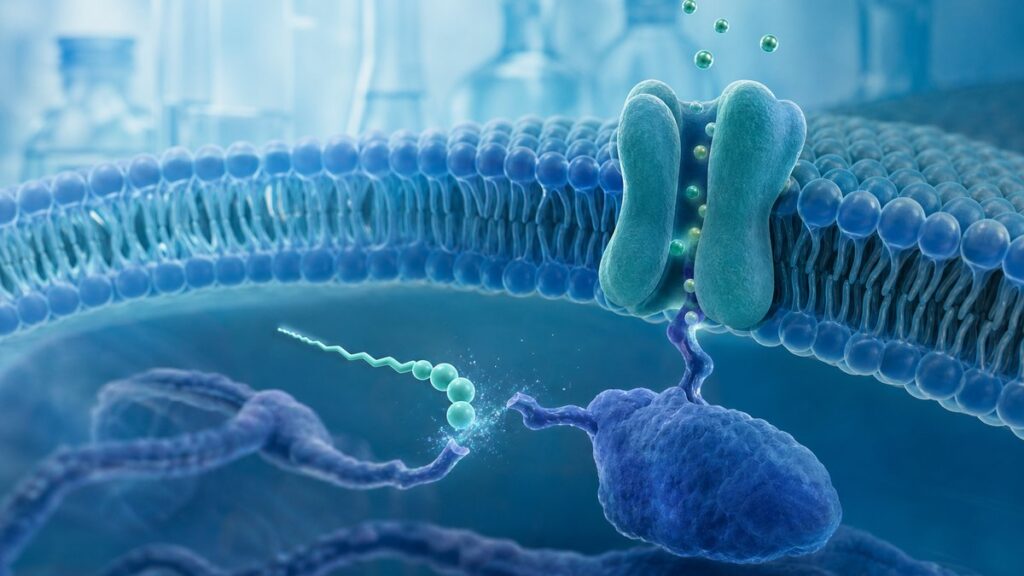
According to the release, Nav1.8 activity in neurons depends on an interaction with the scaffolding protein ankyrin-G (Ank3). That interaction helps maintain heightened electrical activity in pain-triggering neurons during pathological pain. (Different outlets use ‘ankyrin-G’, ‘ankyrin-3’ and ‘Ank3’ for this protein.)
The team disrupted the interaction with a short lipidated peptide, or SLiP. They report that this lowers the amount of Nav1.8 in the cell membrane, quiets hyperexcitable pain-triggering neurons and reduces pain-like behaviours in mouse models. Acute protective pain was spared.
Inside Precision Medicine gives more detail on the animal work. It says the Nav1.8–Ank3 partnership appears to matter most after nerve injury, and that disrupting it reduced the Nav1.8 available at the cell surface. The peptide was tested in mouse models of neuropathic and inflammatory pain. It reduced spontaneous pain-like behaviour and heightened responses to touch, but did not interfere with acute pain responses in uninjured animals.
The same outlet reports a comparison with gabapentin, a commonly used nerve-pain drug. Gabapentin reduced the animals’ movement at the time of greatest pain relief, while the experimental peptide did not produce a similar decrease in mobility. We could not check the dosing, group sizes or statistics behind this comparison, so it should be read as a reported finding rather than a head-to-head efficacy result.
Why it matters
If the approach holds up, it would suggest a way to damp pathological pain signalling while leaving normal protective pain intact. Inside Precision Medicine describes this as targeting the mechanisms that keep pain-sensing neurons abnormally active, rather than broadly suppressing their normal function. The release frames the work as a possible route to non-opioid therapies. It also frames short lipidated peptides as a drug class with broader potential: ‘It also provides evidence that short lipidated peptides, or ‘SLiPs,’ have immense potential to treat pain and other diseases.’ That is the researchers’ own view, not a demonstrated result.
Commercial link
Boston Children’s has licensed the intellectual property from this work to Mimetic Medicines, a Boston-based biotech. The company has developed investigational long-acting SLiP candidates designed to disrupt the Nav1.8–Ank3 interaction systemically. The release says the company is led by a former Woolf lab postdoc. Readers should weigh the findings with that relationship in mind. Fierce Biotech’s coverage attributes the peptide to Mimetic: it describes a SLiP developed by Mimetic Medicines and the paper published on 6 October. The hospital release instead describes the original academic discovery as the starting point for the company’s candidates. We could not confirm from the sources how the peptide in the paper relates to the company’s candidates. We found no public information on a clinical trial or regulatory filing.
Limitations and uncertainties
- Animal data only. The findings remain preclinical, and the researchers noted that the importance of the Nav1.8–Ank3 interaction still needs confirmation in humans.
- Translation is a known weak point. The release itself notes that sodium-channel strategies that worked preclinically have not yet matched that in clinical settings, so mouse results do not predict human benefit.
- Behavioural readouts. ‘Pain-like behaviours’ in mice are indirect measures of what people experience as pain.
- Missing details. We could not verify sample sizes, doses, route of administration, duration of effect, or safety and off-target data. None of the coverage we found reported them.
- Independence of coverage. News-Medical, EurekAlert and Medical Xpress appear to carry the same hospital release. Trade outlets add some detail, but we found no commentary from researchers outside the project.
What happens next
The sources describe the mechanism as informing therapeutic development. Mimetic Medicines’ stated goal, per the release, is a non-opioid treatment for chronic neuropathic pain that selectively suppresses pathological pain signalling rather than normal sensory function. The coverage gives no timeline, no human trial and no regulatory status. A drug would need safety testing and clinical trials, and none of that has been reported.
Conclusion
This is an early-stage mouse study. Its main contribution is a mechanism: Nav1.8 appears to rely on ankyrin-3 to sustain overactive pain neurons, and interrupting that link with a lipidated peptide reduced pain-like behaviour in animals. Whether the finding applies to people, and whether any peptide drug can be made safe and effective, is unknown. For help judging claims like these, see our guides on how to read a peptide research update and what to check before you share a peptide headline.
Sources
- News-Medical: Novel peptide approach reduces chronic neuropathic pain in mice (6 Oct 2026)
- EurekAlert / Boston Children’s Hospital: Researchers describe a new approach for reducing neuropathic pain
- Medical Xpress: Promising nonopioid approach for reducing neuropathic pain disrupts a protein interaction
- Inside Precision Medicine: Experimental Peptide Quiets Chronic Pain Signals While Preserving Protective Pain
- Fierce Biotech: Mimetic’s peptide shows promise in reducing neuropathic pain
Source
This report is based on original reporting by News-Medical on 2026-10-06. Read the original article: Novel peptide approach reduces chronic neuropathic pain in mice.